
Most of the time you do not really get close to deer, they get close to you, and that took me a while to accept because the natural thing to do when you see one is to move toward it. Learning how to get close to deer without spooking them is mostly about picking a place deer already want to be, sitting on a good wind, and staying still long enough that they come through on their own. This is one piece of a bigger system, laid out in The Hunter’s Guide to Wildlife Photography.
Wind decides whether you sit or go home
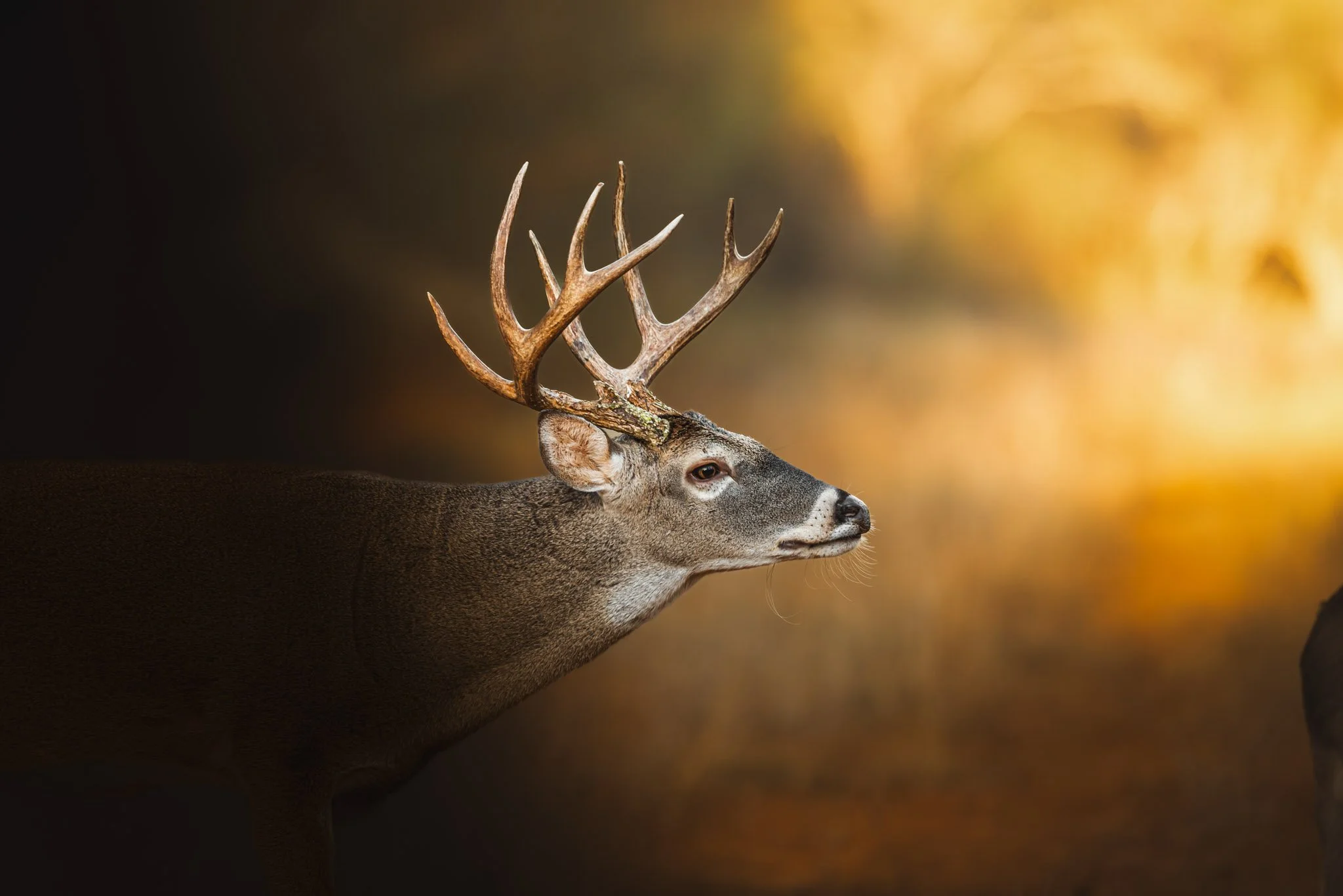
Nikon Z5, 500mm, f/5.6, 1/400. Dominick Gatto, TX 2024
A deer's nose is its best defense, and the wind is either taking your scent away from them or carrying it right to them. If the wind is wrong for the spot you had planned, the honest move is to sit somewhere else that day or not sit there at all, even if that spot has been good before. Forcing it just teaches the deer in that area that something is off, and they will avoid the place for a while.
A steady wind is easier because you can plan around it and have some idea where your scent is going. A light, swirling wind is a lot harder, and on mornings like that it helps to pick a place where deer are only likely to come from one side, like a field edge with water behind you or ground that drops off steep. Thermals matter too as the air warms and cools, so I check the wind with milkweed seed or dry grass when I set up and keep checking it through the sit.
Scent: wind discipline beats products
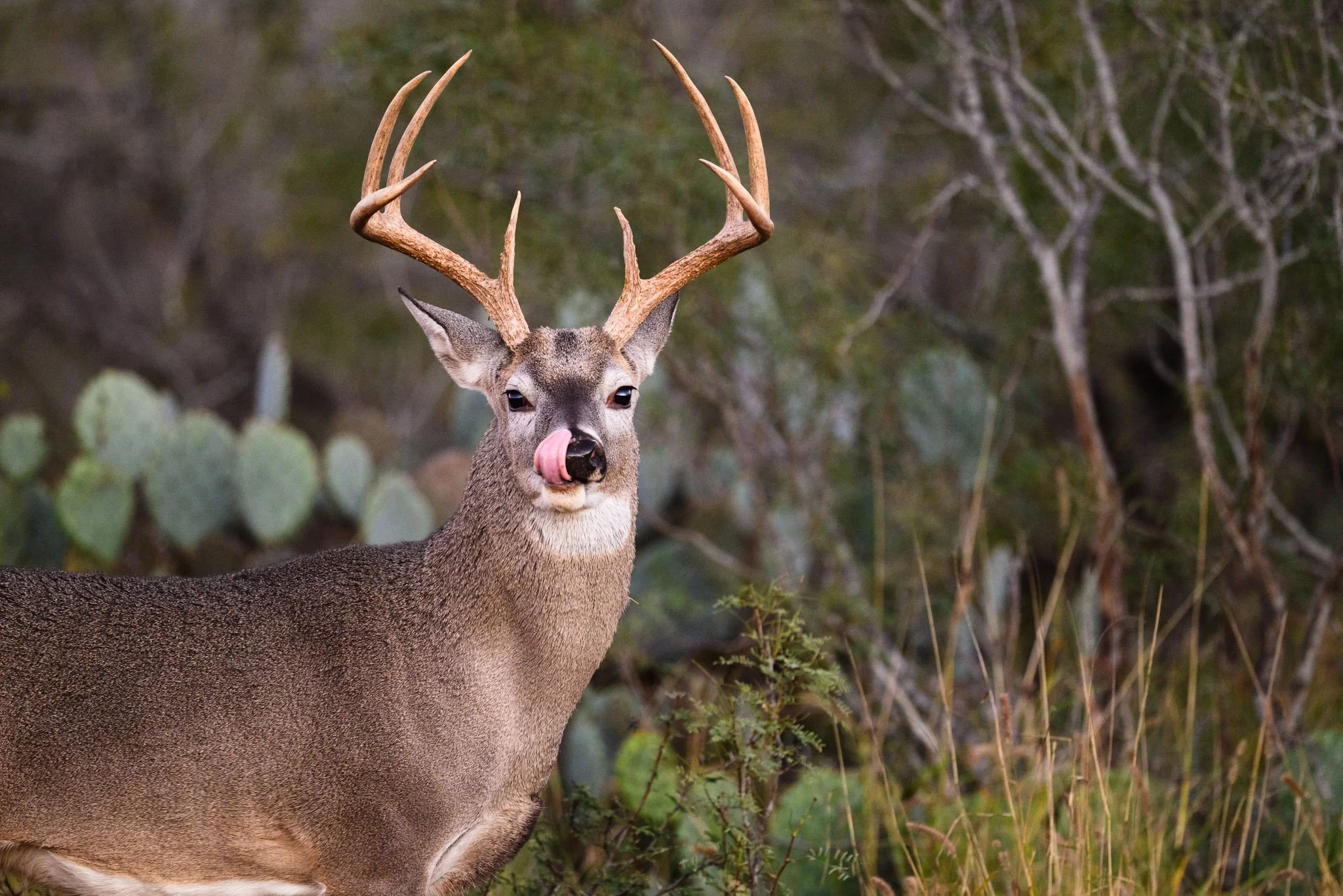
Nikon Z5, 500mm, f/5.6, 1/500. Dominick Gatto, TX 2022.
The hunting industry sells a lot of scent control products, and some of it probably helps a little, but none of it fixes a bad wind. A whitetail does not need a strong smell to know something is wrong, it just needs a little human scent on the wrong air, and you are never going to smell like nothing. The real control you have is keeping your scent from getting to the deer, and that comes back to wind again.
The stuff that helps is pretty boring. I keep my field clothes clean and stored away from house smells, and I get dressed at the trailhead instead of before the drive. Your entry route matters too, because the scent you leave walking in stays on the ground after you settle, so I come in from downwind and stay out of the ground I hope to photograph.
Movement is what gets you caught
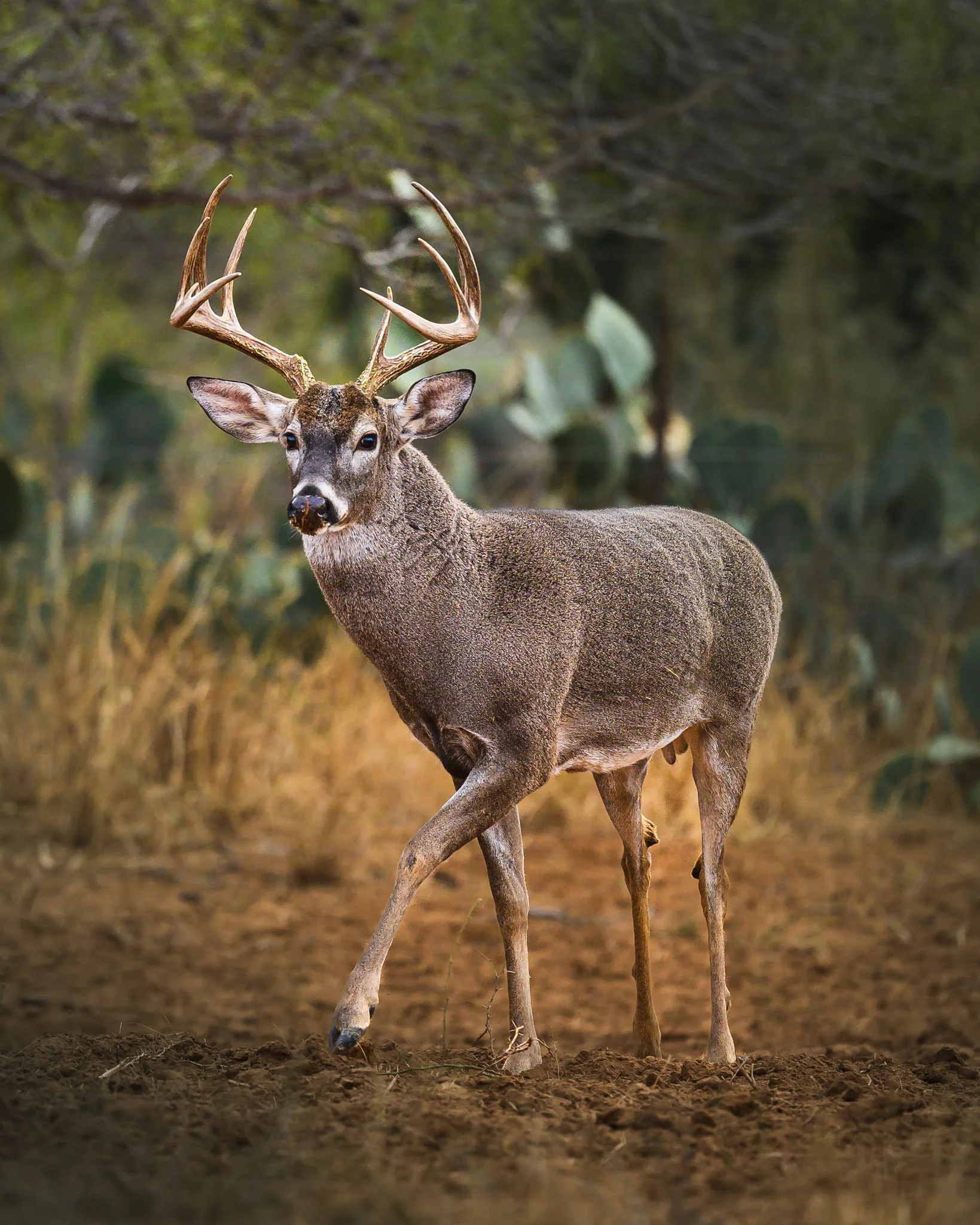
Nikon Z5. 500mm. f/5.6. 1/120. Dominick Gatto, TX 2024.
Deer pick up movement very well, even though their eyes are not sharp for detail like ours, and a still shape in some cover will often get looked at and then ignored if it does not move. Motion gets their attention fast, even from far off, so you do not have to be invisible as much as you have to be still. When you do move, it has to be slow and timed to what the deer is doing.
A deer with its head down feeding is your window to raise the camera, and usually you get time for one slow move then. If the head comes up halfway through, you stop and hold that position, even if it is uncomfortable, because finishing the move in front of a deer that is looking gives you away. When a deer stares and stamps its foot, it has something that does not add up and is trying to get a clearer answer, and if you stay frozen and your wind holds it will often go back to feeding. For the full breakdown of this moment, see "Reading Deer Body Language: The 10 Seconds Before the Shot”.
Sound is information too
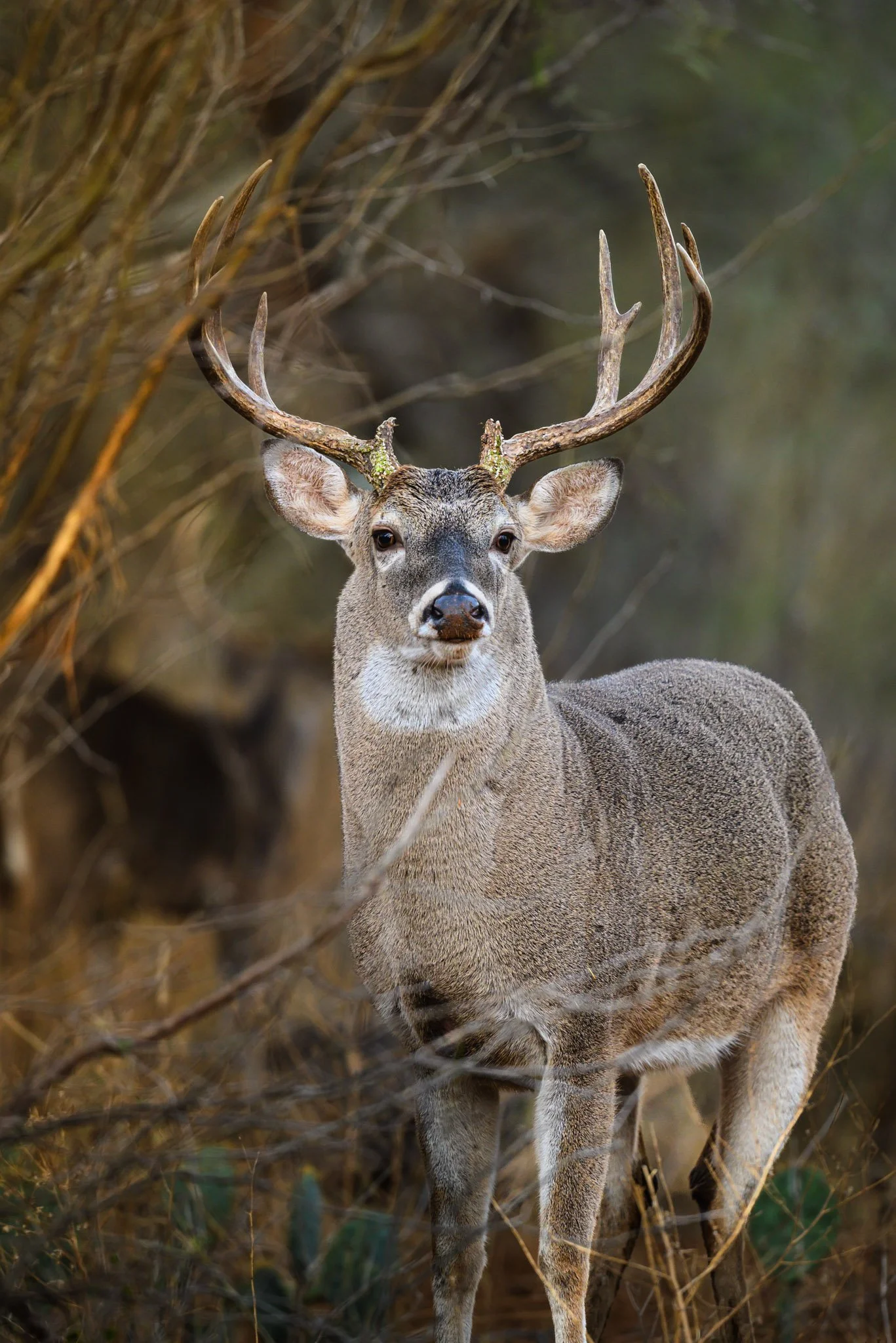
Nikon Z5. 500mm. f/5.6. 1/200. Dominick Gatto, TX 2022.
Noise works a lot like scent, it tells a deer something is in the woods that does not belong there, and sharp mechanical sounds stand out the most. A zipper or velcro or a tripod leg snapping open carries in a way normal woods sounds do not, so I get all of that done once, early, at setup. After that the camera is about the only thing that moves, and quiet clothing helps because stiff fabric that swishes when you shift your weight will give you away on a calm morning.
Camouflage's real job
Camouflage matters, just not in the way it is usually sold, and an expensive pattern is not what makes the difference. What it really does is break up your outline so you do not look like a solid human shape against the trees, and your face and hands stand out the most. A facemask and gloves do a lot of real work there, and the rest still comes down to wind and not moving at the wrong time.
The exit matters as much as the entry
How you leave matters if you want a spot to keep working, and walking out through deer when they are starting to move tells them exactly where you were sitting. Do that a couple of times and the spot can go dead for a while, even if you did everything right while you were there. It is usually better to wait until deer have drifted off, even if that means sitting longer than planned, or take the longer way out that keeps you in cover.
The takeaway
In plain terms, getting close without spooking deer is doing the same few things over and over. You pick ground deer already use, you only sit it when the wind lets you, you move when their heads are down and stop when they are up, and you keep the noise down and do not ruin the spot on your way out. It does not happen every sit, but when it does work it usually traces back to those basics.
FAQ
What is the best way to approach a deer for a photo?
Usually, you do not approach at all, because the better play is to set up on the right wind where deer already travel, stay still, and let them close the distance themselves.
Do scent-control products actually work?
Not as a foundation, since clean clothes help at the margins, but no spray or suit overrides a bad wind, and sitting where your scent cannot reach the deer is what does the real work.
What should I do when a deer stares at me and stomps?
Freeze completely, because the deer has not confirmed what you are and is trying to force a reaction out of you, and if your wind holds and you do not move, it will often relax and go back to feeding.

The Wild Doesn’t Wait for You
The Hunter’s Guide to Wildlife Photography is not a technical manual. You won’t find pages of charts, gear lists, or step-by-step settings for every scenario. Instead, you’ll learn the quiet skills that hunters have relied on for generations - patience, awareness, and the ability to disappear into the environment - and how to turn those instincts into images that hold the wild within them.
Out here, there are no second chances. The moments worth capturing appear without warning, and they vanish just as quickly. The best images aren’t the product of perfect camera settings - they’re the result of reading the wind, knowing the light, and moving as if you belong in the landscape.
Every lesson comes from the field: long sits in the cold, the electric stillness before a deer steps into view, and the discipline to wait for a single moment that tells the whole story.
If you’ve ever wondered why some photographers seem to be in the right place at the right time, it isn’t luck. It’s fieldcraft.
And you’re about to learn it.
Included in this digital purchase are PDF and EPUB files which have been formatted for use on popular devices and apps including Kindle, Apple Books, Google Play Books, Kobo, Nook, and most computers, tablets, and smartphones.
